
Skip to content
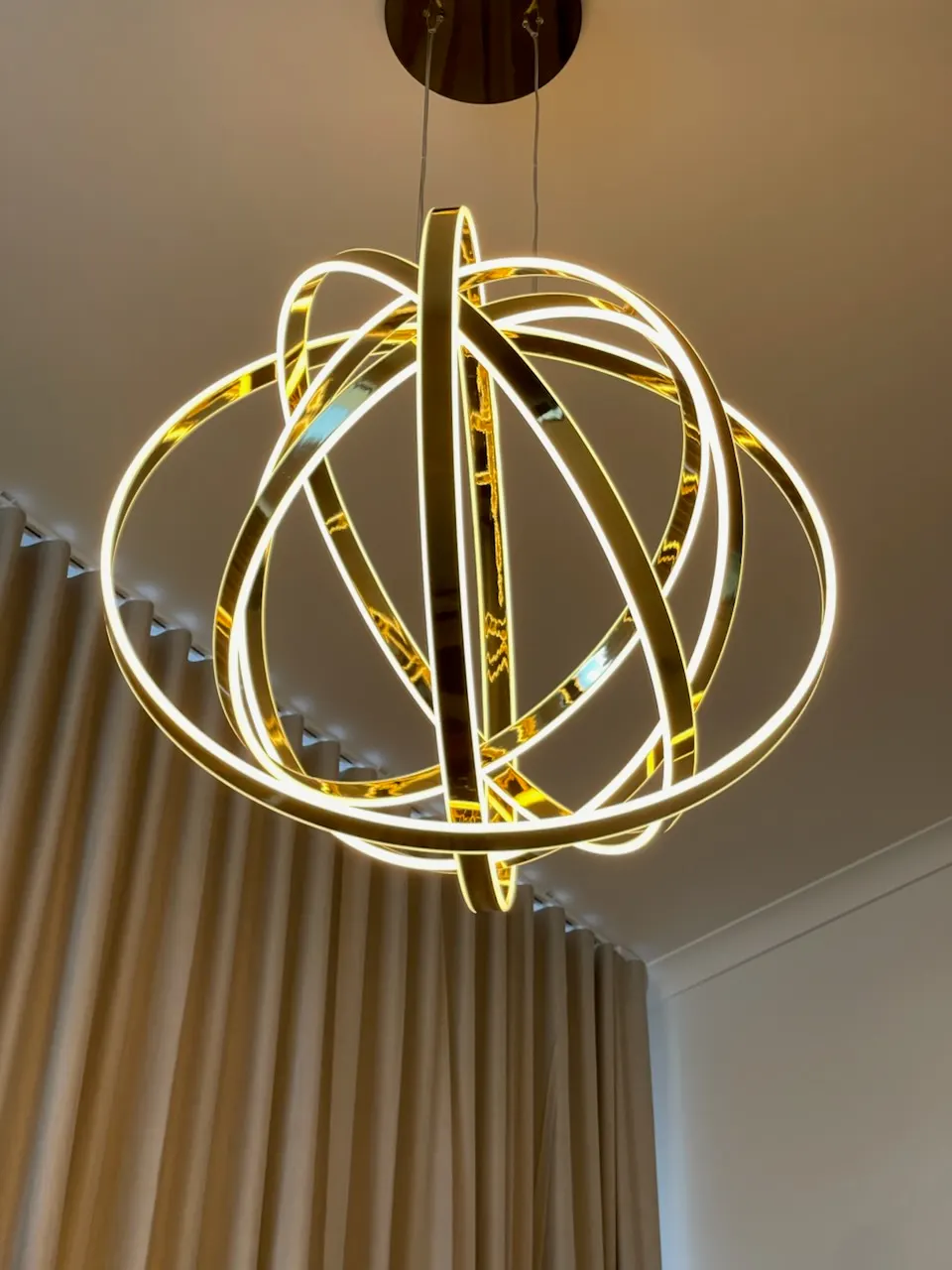
Gold multi-ring LED pendant light glowing in front of tall curtains in Pimpama

How to plan and install LED lighting for an energy-efficient home

LED fittings use a fraction of the power of halogen lights and put far less heat into the ceiling. This guide walks through planning an upgrade room by room, choosing the right fittings and what a licensed installation involves.

Licence REC 135414.7 from 12 Google reviews

Planning an LED lighting upgrade

Start with the lights you have

Walk through each room in the evening and note what is there: downlights, oyster lights, pendants, wall lights and outdoor lights. Note the rooms that feel dim, the lights that stay on for hours each night and any fittings that run hot.

Old halogen downlights are usually the biggest saving. A typical halogen downlight draws about 50 watts plus its transformer, while an LED downlight giving similar light draws around 8 to 12 watts. In a living area with ten downlights, that is the difference between roughly 500 watts and 100 watts for every hour they are on.
Choose the light for each room

Colour temperature sets the feel of a room. Warm white, around 3000K, suits living rooms and bedrooms. Neutral to cool white, 4000K to 5000K, suits kitchens, laundries, bathrooms, garages and work areas. Many LED downlights have a switch on the driver to select the colour, which helps when you are unsure.

Think in layers: general light from downlights or oyster lights, task light over benches and desks, and feature light such as a pendant over a dining table or stair void. LED battens suit garages, sheds and workshops. Brightness is measured in lumens, not watts, so compare lumens when choosing between fittings.

Ratings that matter in Queensland homes

Downlights that sit under ceiling insulation must be rated for it. Look for IC-4 on the box: these fittings can be covered by insulation without overheating, which makes them the usual choice when old halogens come out.

For bathrooms, eaves and alfresco areas, check the IP rating, which tells you how well a fitting keeps out dust and water. A fitting near a shower or exposed to rain needs a higher rating than one under a covered patio. If you want dimming, choose fittings listed as dimmable and pair them with a dimmer made for LED loads, or the lights may flicker or hum.

Replace the fitting, not just the globe

Putting an LED globe into an old halogen fitting is tempting, but the old transformer is often not compatible with LED and the fitting keeps its open, heat-prone housing. Replacing the whole fitting gives you a matched driver, a sealed housing and a fitting rated for the insulation above it.

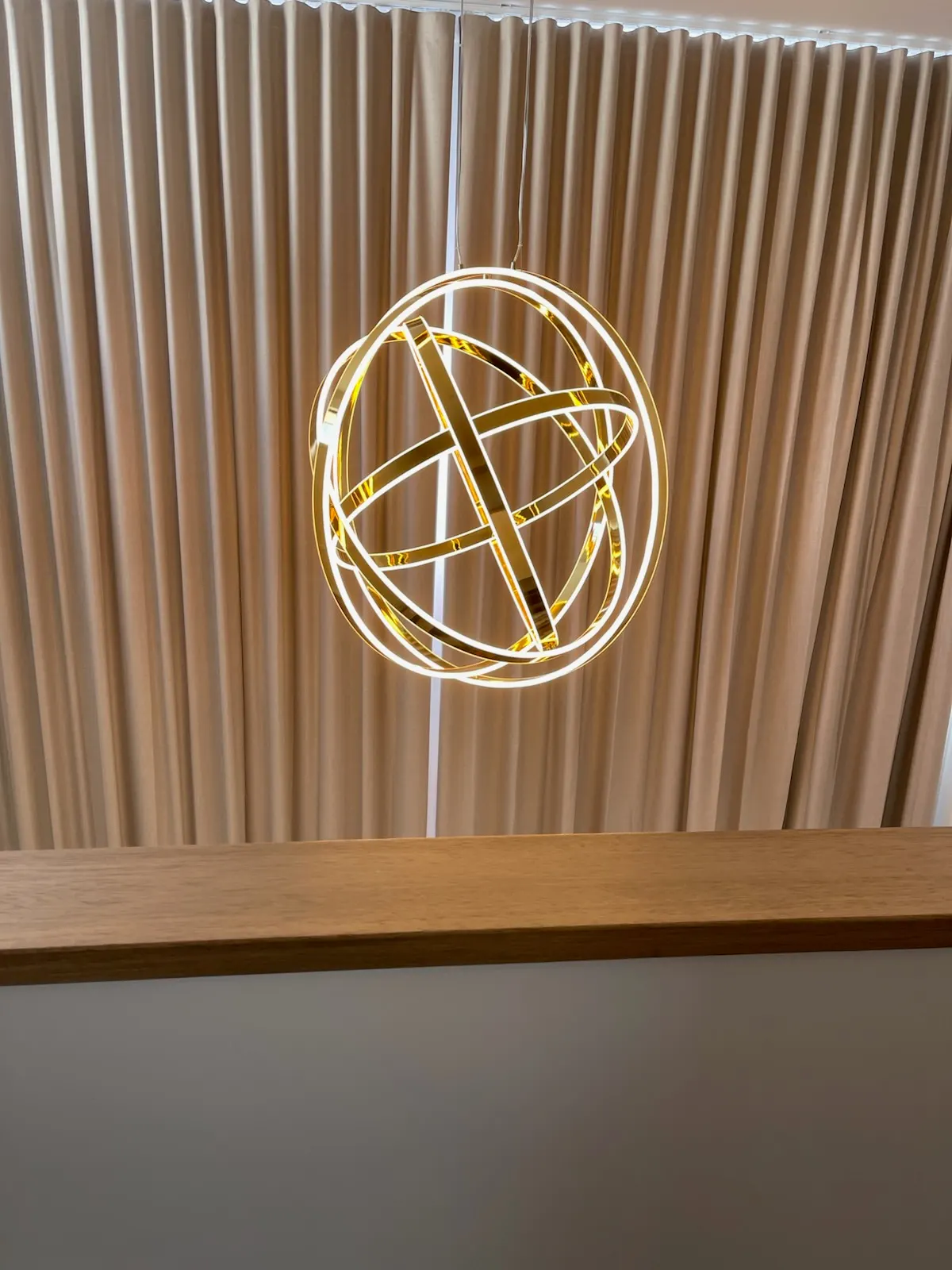
Heavier feature lights need planning. A large pendant, like the gold multi-ring fitting Tom hung over a stair void in Pimpama, needs a mounting point that carries its weight and a switch in a sensible place.

Gold multi-ring pendant light lit up above a stair void in a Pimpama home
Pendant install, Pimpama

What a licensed installation involves

Installing or replacing a light fitting, adding a light point or moving a switch is electrical work, so in Queensland it has to be done by a licensed electrician. Changing a light globe is the part a homeowner can do.

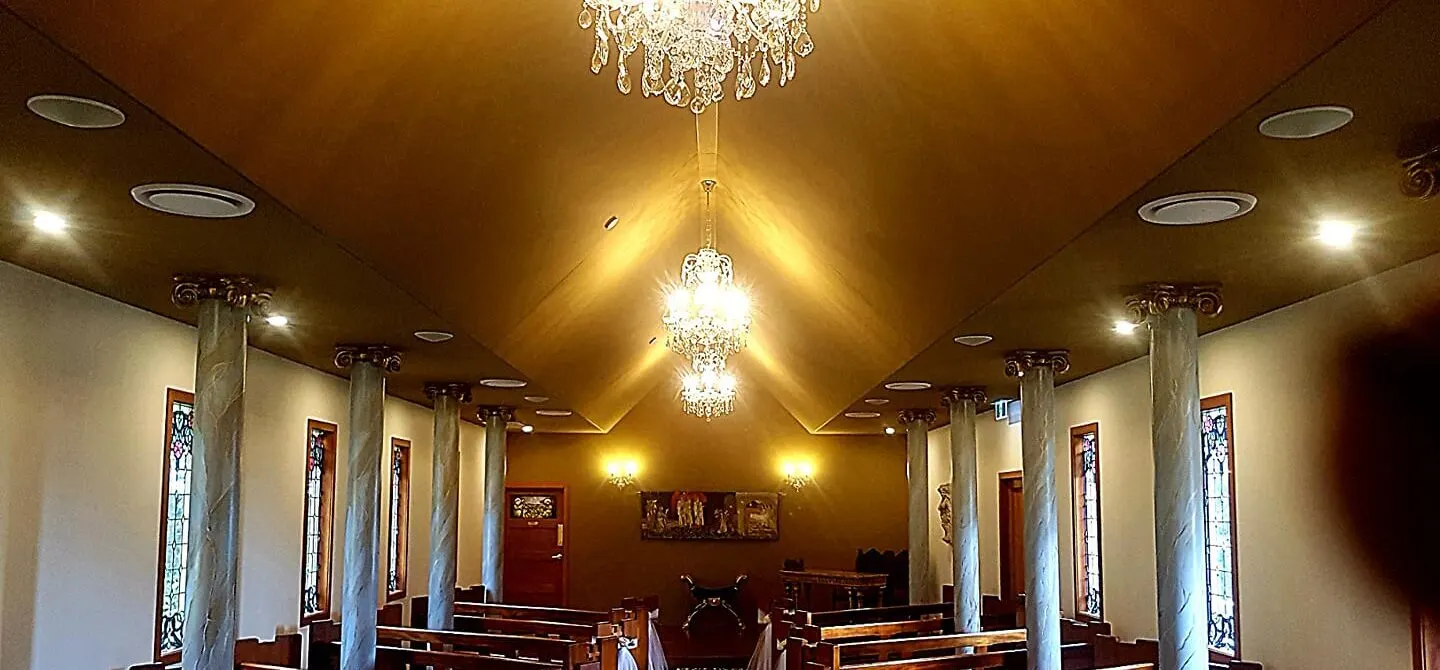
Tom starts by looking at the rooms, the ceiling space and the switchboard, then quotes in writing for the fittings and labour. On the day he isolates the lighting circuit, removes the old fittings and transformers, installs the new fittings with the right clearance to insulation, connects and tests each one, and checks that any dimmers work with the new lights. The church upgrade pictured swapped tired fittings for warm downlights while keeping the chandeliers.

Warm downlights and chandeliers lighting a church interior after an upgrade
Lighting upgrade, church

What the upgrade gives you

LED fittings use around 80 percent less power than halogens for similar light, last many times longer and put far less heat into the ceiling. That matters in a Brisbane summer, when every bit of heat in the ceiling is more work for the air conditioner. With far fewer globes to replace, high ceilings and stair voids stop being a chore.

If you are planning other work, such as extra power points or a split system, mention it when you ask for a quote so the jobs can be done on one visit.

Common questions

Something not covered? Call Tom on 0401 456 987.

Are LED downlights safe to cover with ceiling insulation?

Only if they are rated for it. Look for an IC-4 rating, which means the fitting is designed to be covered by insulation without overheating. Older halogen downlights need a clearance gap around them, and insulation pushed against them is a known fire risk. Replacing old halogens with IC-4 rated LED fittings lets the insulation sit back over the fitting.

Can I replace a light fitting myself in Queensland?

No. Replacing or installing a light fitting, adding a light point or moving a switch is electrical work, and in Queensland only a licensed electrician may do it. Changing a light globe is the only lighting job a homeowner can do. A licensed electrician also checks that the fitting suits the ceiling, the insulation and any dimmer on the circuit.

Want Tom to take a look?

Call 0401 456 987 or send the details for a free written quote.

Call Tom on 0401 456 987