Samford Village sits in a valley formed by parts of the D'Aguilar Range, beside the Samford State Forest section of Brisbane Forest Park. The setting shows in the temperature record. Averages for the Samford CSIRO weather station, kept from 1971 to 1998 before it closed, give a July mean minimum of about 6.7 C and an August minimum of about 6.5 C, while Brisbane's July mean minimum is about 10.6 C. Summer still arrives, with January maximums averaging about 29.4 C.
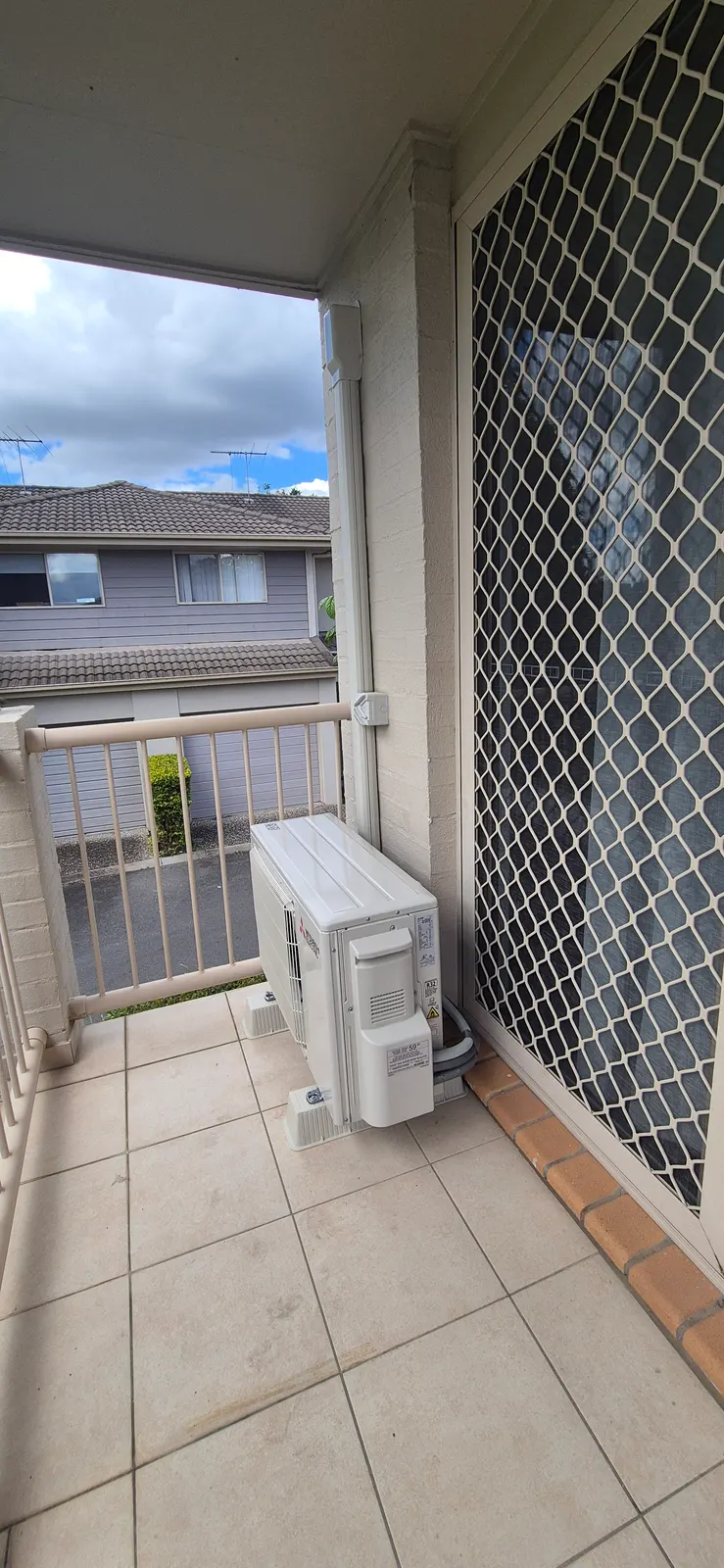
That gap changes how a unit should be chosen. The Energy Rating site says sizing starts from the room itself, its floor area, walls, insulation, windows and climate, and warns that an undersized unit works harder and may not hold temperature, while an oversized one costs more to buy and run. A unit picked only for summer afternoons can fall short on a cold valley evening, so Tom's site assessment covers how each room will be used in both seasons before a size is settled.
For heating, energy.gov.au says reverse-cycle air conditioners move heat rather than make it, delivering roughly 3 to 6 units of heating or cooling for each unit of electricity, and that heating and cooling can account for 20% to 50% of household energy use. The Zoned Energy Rating Label shows annual heating and cooling energy for hot, average and cold zones, so once the size is chosen, compare the heating figures as well as the cooling stars. The Queensland Government suggests heating to 18 C to 20 C, and says each extra degree can add around 5% to 10% to power use.
The electrical side matters in a village built up since 1916. Since 1 September 2026, a licensed electrician must not do installation work in a home unless an approved safety switch protects the general purpose power points, or the job includes fitting one. Tom holds electrical contractor licence REC 13541, so the circuit, any safety switch and the unit can sit on one booking, which saves a second trip from Warner along Eatons Crossing Road.