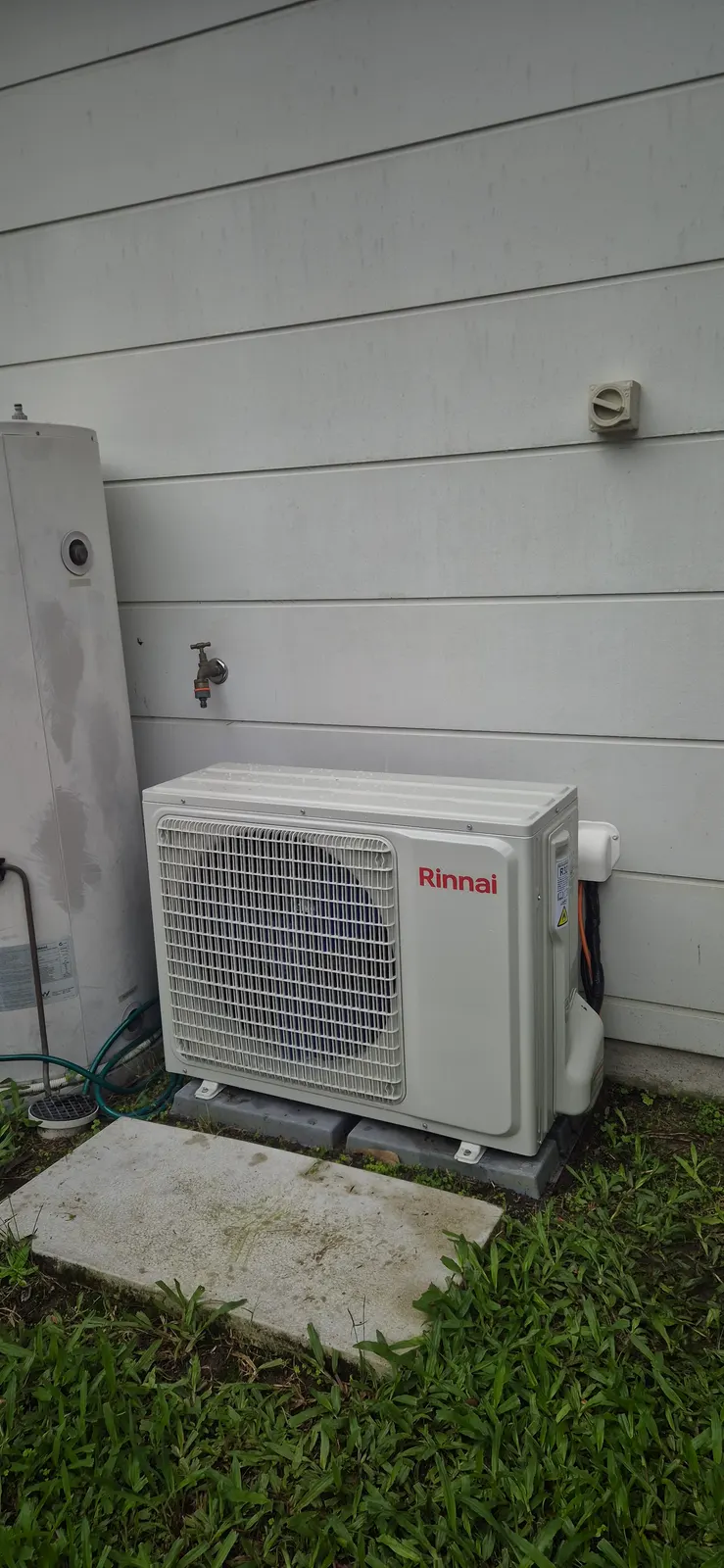
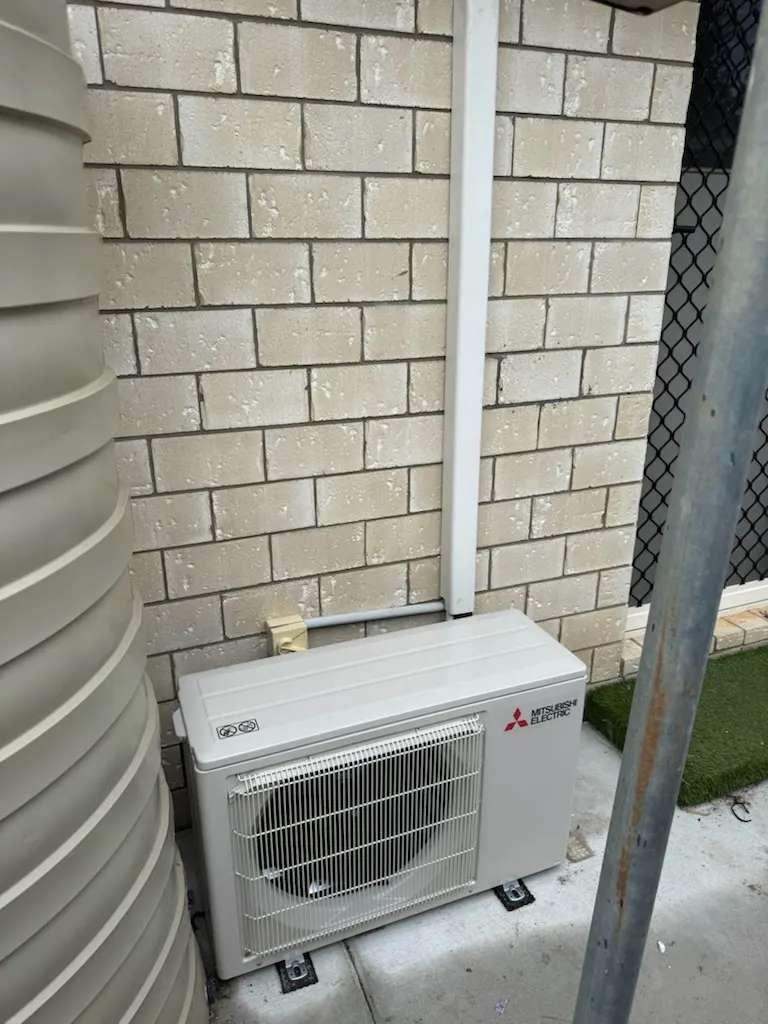
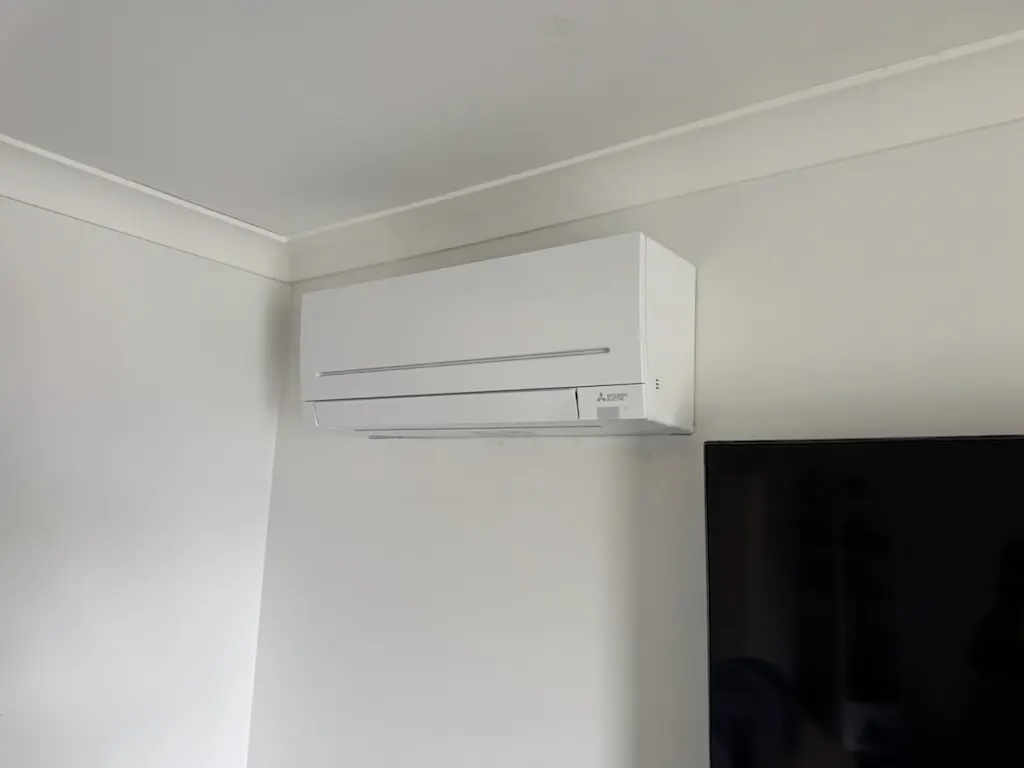
Three Census figures sketch the kind of house a Joyner install is likely to happen in. Of the suburb's 1,219 private dwellings, 94.7% were separate houses, 74.7% had four or more bedrooms, and the average was 3.9 bedrooms against 3.2 for Queensland. With three people per household on average, many of those houses are likely to have rooms that sit empty for much of the day, so the Queensland Government's advice to cool only the rooms in use, with doors and blinds closed, carries real weight here.
Capacity is the first decision. Energy Rating guidance works from the room: its floor area, wall material, insulation, windows and climate. In a four-bedroom Joyner house, an open family room off the kitchen and a small study can call for very different capacities, and Tom's described approach is a site assessment and sizing so each unit is neither too small nor too big.
The label is the second. The Zoned Energy Rating Label scores non-ducted units from 1 to 10 stars across hot, average and cold zones, listing annual cooling and heating kWh for each zone, with indoor and outdoor noise in dB(A) shown as a separate figure. Brisbane is shown in the hot zone, so the hot-zone stars are probably the ones a Joyner buyer should compare, although the zone for postcode 4500 is worth confirming on energyrating.gov.au. Multiplying the label's annual kWh by the tariff on your power bill gives a yearly running estimate. The Brisbane city station records mean maximums near 30 degrees from December to February and a July mean minimum around 10.6 degrees, readings from the city rather than a Joyner gauge, which is why a reverse-cycle unit that heats as well as cools suits the year.
Wiring comes last. A new split is fed by its own circuit, and the Electrical Safety Regulation 2026 generally bars electrical installation work in a Queensland home unless a safety switch already protects the power point circuits or the job includes fitting one, subject to limited exceptions. Safety switches have been mandatory for new and extended Queensland homes since 1992, so a recently built Joyner house usually clears that precondition already, though its board still needs checking for room to take an extra circuit. Tom's pages say the business upgrades circuits or the switchboard where a job requires it. Under the Wiring Rules only the altered circuit needs RCD protection, and after connection a certificate of testing and compliance is due to the customer as soon as practicable.