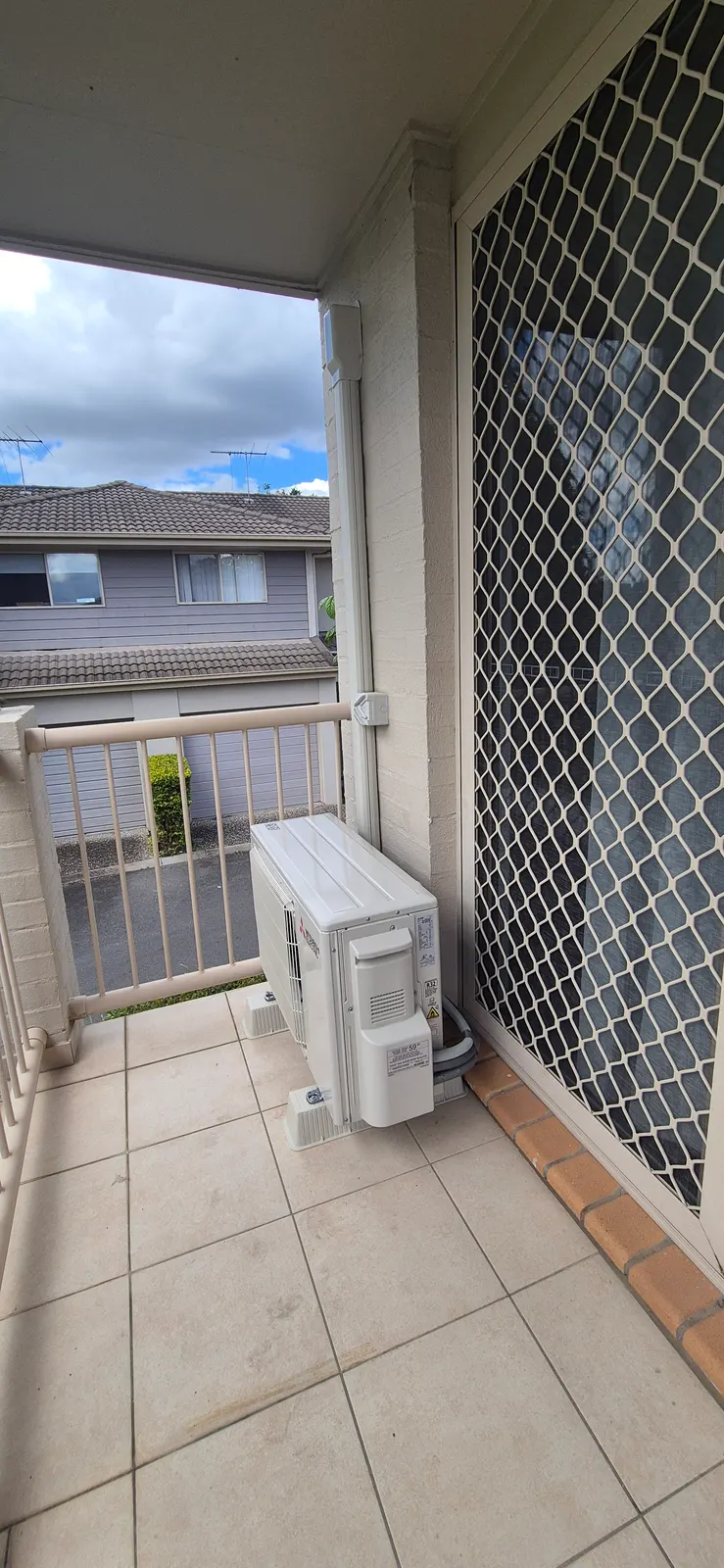
Cooling a four-bedroom house is a different job from cooling a unit. More than half of Murrumba Downs dwellings have four or more bedrooms, and in those homes the split systems in the lounge, the main bedroom and the children's rooms all draw on the same meter. Small inefficiencies in each one stack up across a Queensland summer.
Dirt is the first cost. Mitsubishi Electric says dust on the filter restricts airflow and reduces a unit's efficiency, and lists higher electricity bills among its signs that a service is due. Tom's own guidance makes the same point from the other side: a grimy unit has to keep running harder, and for longer, to cool a room. Daikin adds that filters dirty faster when the outdoor unit sits beside a dusty area such as a driveway.
Settings are the second cost. The Queensland Government recommends 24 C to 26 C for cooling and estimates that every extra degree can raise electricity use by about 5% to 10%. It also suggests closing doors, windows, curtains and blinds in the rooms being cooled so the cool air stays put. In a large home that often means cooling the rooms in use rather than running every unit at once.
The household can do part of the work. Mitsubishi Electric suggests washing filters about every two weeks, and the Queensland Government treats twice a year as the minimum for efficient running. The rest needs a technician. Tom treats a yearly service as the baseline for most homes, sooner where units run hard through summer or already show build-up. On each visit he cleans the main components, checks airflow and the unit's general state, runs it, goes over the wiring and looks for mould, leaks and blocked drains. Units caked inside can be booked for a hydro clean.